Midterm Study Guide
By Khyree Alexander
10/8/14 Period.4
1. Lab Colors -CMYK is a four-channel color space—the color channels are Cyan, Magenta, Yellow, and Black—used to describe the color values in images that will be printed in books and magazines. LAB is a three-channel color model—I'll explain how the channels work in a moment
2. Reverse Engineering (Kevin Doe Video) -is the process of extracting knowledge or design information from anything man-made. The ultimate goals for obtaining such information are varied. A typical goal for reverse engineering a product is to create a (possibly improved) copy or even a knockoff; this is usually the goal of a competitor.
3. TSA website – Main facts- Leadership and opportunities in technology, innovation, design and engineering
4. What is a CTSO - CTSOs are committed to the growth of students in all CTAE career pathways
5. Color for TSA- The colors of TSA shall be scarlet (red), white, and blue (navy). Scarlet (red) represents the strength and determination of the technology education students and teachers to obtain their goal. White represents high standards, morals, and religious beliefs
6. Go back and review the CTSO webinar video quiz
7.
Go back and look at the information about the history of technology –
know your time periods and definitions from the assignment titled
“Designing your vocabulary words.”-
is the history of the invention of tools and techniques, and is similar in many ways to the history of humanity
8. Know what the purpose of an engineer’s design notebook is (format, design, etc.)- To avoid being disorganized, designers and engineers keep design notebooks, where they record every detail of their projects along the way
9. Architectural scale measurements- is a specialized ruler designed to facilitate the drafting and measuring of architectural drawings, such as floor plans and orthographic
10. Metric system conversions- originated in France in 1799 following the French Revolution although decimal units had been used in many other countries and cultures
11. Engineering Lettered- With the goals of legibility and uniformity, styles are standardized and lettering ability has little relationship to normal writing ability.
12. Rapid Prototyping (Faster Solutions for a Brighter Future assignment)- is a group of techniques used to quickly fabricate a scale model of a physical part or assembly using three-dimensional computer aided
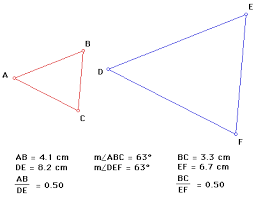
13. Scale Factor- is a number which scales, or multiplies, some quantity. In the equation y=Cx, C is the scale factor for x
14. Understand what drafting is- An engineering drawing, a type of technical drawing, is used to fully and clearly .... Some of the tools of manual drafting include pencils, pens and their ink
15. Parametric/Surface modeling- is the art of engineering Freeform Surfaces with a CAD or CAID system
16. Orthographic/Multi – View Drawing- In technical drawing and computer graphics, a multiview orthographic projection is an illustration technique in which up to six pictures of an object are produced
17. Future of Engineering Blog Post- What will it take for the engineers of the future to meet society's challenges? Prominent engineering organizations and leader panels have weighed in
18. TSA competitive events blog post- Detailed specifications and rules regarding each event can be found in the 2015 & 2016 High School Technology Activities, National TSA Conference Competitive
19. Maker Movement- has the potential to turn more and more people into makers instead of just consumers.
20. Know the difference between wire frame models, surface, and solid models
A wire-frame model is a visual presentation of a three-dimensional (3D) or physical object used in 3D computer graphics
In mathematics, specifically, in topology, a surface is a two-dimensional, topological manifold. The most familiar examples are those that arise as the boundaries
Solid modeling (or modelling) is a consistent set of principles for mathematical and computer modeling of three-dimensional solids






No comments:
Post a Comment